A personal page for therapists
People looking for a therapist are often reading your page on a bad day. It has to feel calm, answer the practical questions (fees, availability, online or in person) and make a first consultation easy, without asking anyone to share more than they're ready to.
What your page should include
- Who you work with and the approaches you use, in plain language
- Qualifications and registration or licence details
- Fees, session length, and whether you offer a sliding scale
- Online, in person, or both, and where
- A short, free consultation call people can book without explaining themselves
Sections that work
Who I work with → How I work → Fees & practicalities → About me → Book a free consultation
Looks to start from
Mint or Matcha: soft colour, lots of space, nothing shouting. Ivo can restyle any of them to your colours.
How clients actually find a therapist
Very few people search for a therapist and book the first name they see. They get a recommendation from a friend or doctor, find a few names in a directory like Psychology Today or a local association list, and then read each therapist's own page before writing to one. That last step is where you win or lose them.
Directories are useful for discovery, but every profile looks the same and sits next to twenty others. Your own page is calmer. It lets you explain how you work in your own words and shows up when someone searches your name after hearing it from a friend.
What a worried reader needs to see
Someone reading your page is often anxious and short on energy. Answer the questions they're scared to ask before they have to:
- Who you work with: adults, couples, teenagers, families. Name the areas you focus on, like anxiety, grief, trauma or relationships, in everyday words before clinical ones.
- How you work: CBT, EMDR, psychodynamic, person-centred. One sentence on what a session actually feels like is more reassuring than a list of acronyms.
- Practicalities: fees, session length, how often people usually come, sliding scale or concession places, cancellation policy.
- Where: online, in person, or both, with the city or neighbourhood. If you can only see clients in certain states or countries because of licensing, say so.
- Credentials: qualifications, registration or licence number, and the professional body you belong to.
Privacy comes first, and it changes the setup
featurd is a public page builder, not a clinical system. It doesn't replace your practice management software, and you shouldn't use its forms or chat to collect health information. If you practise in the US, treat it as a marketing page outside HIPAA scope; elsewhere, the same caution applies under GDPR, India's DPDP Act or your local rules. This isn't legal advice, and your professional body's guidance comes first.
In practice that means a booking or contact form that asks only for a name, an email or phone number and a preferred time. No "tell me what you're struggling with" box. If someone volunteers details in a first message, move the conversation to your usual secure channel.
Testimonials need care too. The APA's ethics code bars psychologists from soliciting testimonials from current clients, and many other bodies take a similar view. Most therapists leave reviews off entirely and let their approach, training and a warm introduction do the work.
Your featurd setup
These are the sections we'd use, in this order:
- Header with your name, title and one line on who you help: "Counselling psychologist for adults with anxiety and burnout, online across Maharashtra".
- Text section: "How I work", written in first person, under 150 words.
- Offers: your session types with fee and length, such as "Individual session, 50 min, ₹2,500" and "Free 15-minute consultation".
- Book: native booking synced with Google Calendar. Create a free consultation type and a session type; both are unlimited on every plan.
- FAQ: what to expect in a first session, how confidentiality works, what happens if you need to cancel.
- Subscribe: optional, for a monthly letter or free worksheets, if you write one.
- Contact: the minimal form, with a crisis line note above it so nobody mistakes your page for urgent help.
An example page
Picture Dr Meera Iyer, a counselling psychologist in Pune. Her page opens on the Mint look with a soft green header: "Therapy for adults who are tired of holding it together". Below it, three short paragraphs on her approach (CBT and compassion-focused therapy), then her fees, then a button for a free 15-minute call that opens straight into her calendar.
Lower down sits a short FAQ about what the first session is like and a line in small type: "If you're in crisis, please call Tele-MANAS on 14416 or go to your nearest emergency department." There are no testimonials. Her RCI registration number sits in the footer.
Small things that build trust
- A real photo of you, ideally in natural light. People want to see the face they'll be talking to.
- Plain words before clinical ones. "Feeling stuck after a loss" before "grief and bereavement".
- A fast page. Matcha and Mint are light and readable on an old phone.
- No countdown timers, no urgency, no pop-ups. Calm is the point.
- Your own domain on Pro, if you'd like the page to live at yourname.com.
Getting started
Upload your CV or the text from your directory profile and Ivo drafts the sections above; you rewrite the voice so it sounds like you. Then pick a look in Explore. If you also run groups or workshops, see our page for coaches on selling programmes.
Looks to start from
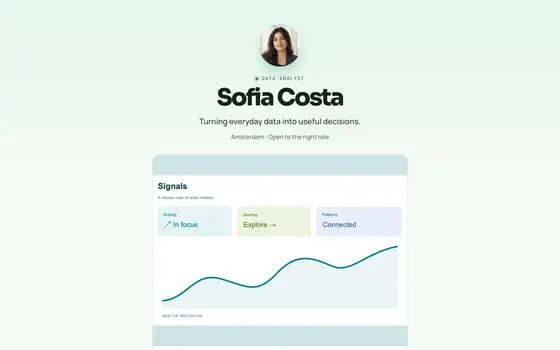 Mint
Fresh and calm. Great for job seekers.
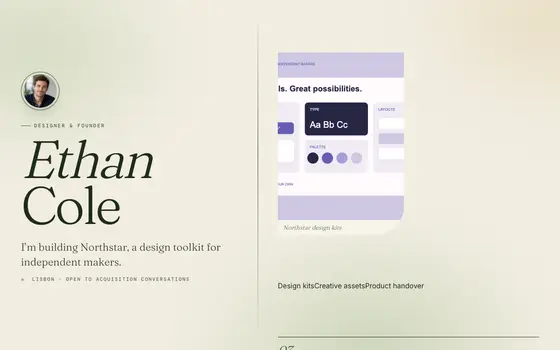 Matcha
Editorial calm: a sticky serif column, numbered sections, drifting sage light.
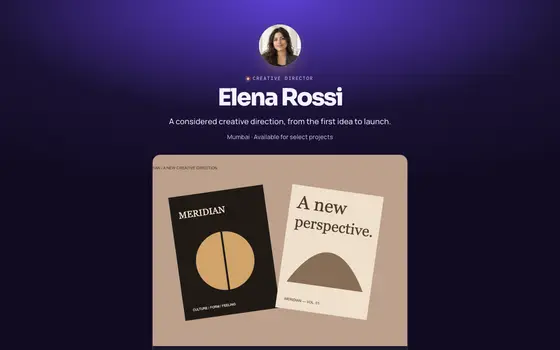 Dusk
Deep violet with a warm glow.
See all 36 templates, live pages in Explore, or describe your own and Ivo builds it.
Questions
Can therapists use featurd to take bookings?
Yes, for consultation calls and sessions. Clients pick a free slot from your Google Calendar. Keep the booking questions to name and contact details; don't ask people to describe symptoms or history in a web form.
Is featurd HIPAA compliant?
featurd isn't a clinical records or telehealth system, and you shouldn't use its forms or chat to collect health information. Use it as your public front door and keep notes, intake and sessions in the clinical tools you already trust.
Can I show client testimonials as a therapist?
Many professional codes, including the APA's, discourage or forbid asking current clients for testimonials. Check your own body's rules. Most therapists show credentials, approach and a warm introduction instead.