A personal page for virtual assistants
Busy founders hire a virtual assistant to get hours back, so they judge your page in a hurry. Show exactly which tasks you take off their plate, which tools you already know, and how a trial week works.
What your page should include
- The tasks you handle, grouped: inbox, calendar, bookkeeping, social, customer support
- Tools you're fluent in
- Your working hours and time zone overlap
- Retainer packages or an hourly rate
- A discovery call to book
Sections that work
What I take off your plate → Tools I use → Packages → Clients say → Book a discovery call
Looks to start from
Signal or Bento: tidy, organised, reassuring. Ivo can restyle any of them to your colours.
Founders hire for hours back
Most virtual assistants find clients through referrals, Facebook and LinkedIn groups, freelance marketplaces and agencies. The buyer is usually a founder, coach or executive who is drowning and short on time to read. They want to see, in thirty seconds, which tasks you'd take over, whether you already know their tools, and whether your hours overlap with theirs.
A clear page also does something less obvious: it signals that you're organised. If your own page is tidy, they assume their inbox will be too.
Name the tasks, not the job title
"Virtual assistant" covers everything from data entry to running an executive's life. Group the tasks you're best at and want more of:
- Inbox and calendar: triage, scheduling across time zones, travel booking.
- Operations: SOPs, CRM updates, invoicing, chasing payments, bookkeeping support.
- Content: scheduling social posts, newsletter formatting, podcast show notes.
- Customer support: help desk tickets, order issues, community moderation.
- Research and admin: lead lists, vendor comparisons, document formatting.
Proof when everything is confidential
VA work is private by nature. You can't show a client's inbox, but you can describe outcomes: "Cut response time on 300 weekly support tickets from two days to four hours", "Set up a CRM that recovered ₹4L in overdue invoices". Ask the client to confirm it with a Trust proof: they receive a link, confirm what you wrote, and it shows as verified on your page. It's the strongest proof a VA can have.
Say how you handle access: password managers rather than shared passwords, NDAs on request, two-factor authentication everywhere. Founders worry about it even if they don't ask.
Your featurd setup
- Header: "Executive and operations VA for founders in the US and UK, 4-hour overlap from India".
- Text: "What I take off your plate", grouped as above.
- Links or text: tools you're fluent in, such as Google Workspace, Notion, ClickUp, HubSpot, QuickBooks, Canva.
- Offers: retainer packages, like 20 hours a month for $500 or 40 hours for $950, plus an hourly overflow rate.
- Cases with results, confirmed by Trust proofs.
- Book: a 20-minute discovery call synced with Google Calendar.
- FAQ: trial weeks, notice periods, how you report hours.
- Contact: a form asking which tasks they want gone first.
An example page
Fatima Sheikh, a VA in Lahore, uses the Signal look: clean white, one bright accent. Her headline reads "I run the inbox, calendar and invoices for three founders, and I have room for one more". Under it, five task groups, a strip of tool logos, three retainer packages and two cases: one about clearing a 4,000-email backlog and one about cutting late invoices in half, both client-verified.
A booking section offers discovery calls in the visitor's time zone, and an FAQ explains her one-week paid trial. When a founder from a LinkedIn post books a call, she gets a notification with their answers before the call starts.
How a trial week works
Founders worry that handing over their inbox will take more time than it saves. A clear trial removes that fear. Spell it out: a 30-minute onboarding call, a shared document of recurring tasks, a password manager invite, daily end-of-day notes for the first week, and a review call on Friday. Offer it at a fixed price so both sides can walk away cleanly.
Put this process in an FAQ section on your page. It answers the question that stops most people booking a discovery call: "What happens next?"
Small details that build trust
- State your hours and response time: "Replies within two hours, 9am to 6pm GMT".
- Show availability honestly. "One retainer slot open from November" creates urgency without pressure.
- Send your page with a tracked link when you reply to a job post, and follow up when it's opened.
- On Pro, chat on your page lets a founder ask a quick question, and Autopilot sends an instant reply when you're with another client.
Specialise to raise your rate
Generalist VAs compete on price. Specialists, like a VA for podcasters, real estate teams or e-commerce stores on Shopify, can charge more because they already know the workflow. Say who you specialise in at the top of the page, and list the niche tools you know.
Getting started
Upload your resume or paste your marketplace profile and Ivo drafts the page. Then pick a look in Explore. For pricing and client management, see freelancers.
Looks to start from
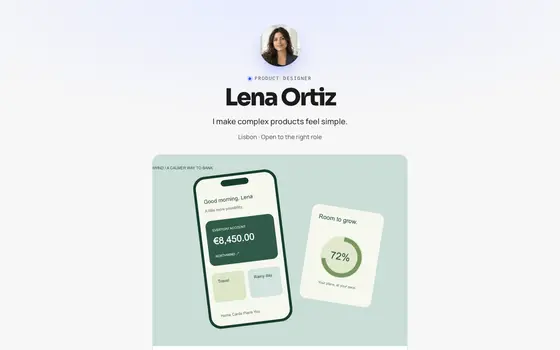 Signal
Clean cobalt on soft grey. The featurd look.
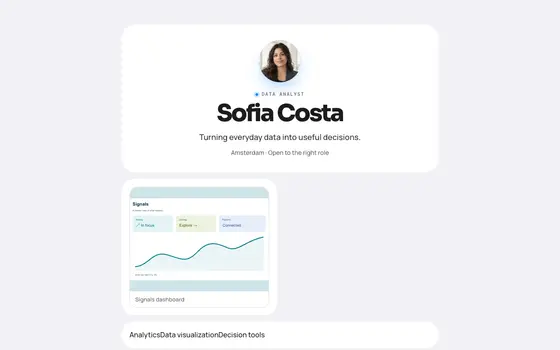 Bento
Everything in tidy cards, Apple-keynote style.
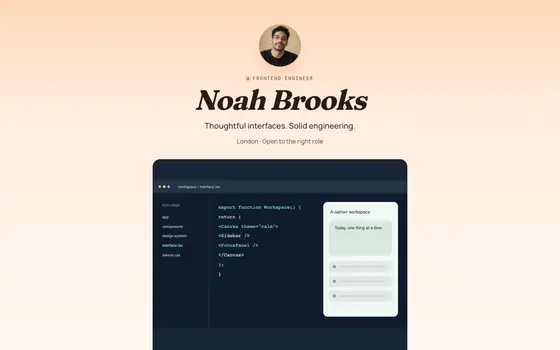 Sunset
Warm gradient, rounded and friendly.
See all 36 templates, live pages in Explore, or describe your own and Ivo builds it.
Questions
What should a virtual assistant website include?
The tasks you handle, the tools you know, your hours and time zone, packages or rates, client reviews and a discovery call to book.
How do I show work as a VA when it's all confidential?
Describe the outcome, not the client's data: "Cleared a 4,000-email backlog in a week and set up filters that kept it under 50". Get a client to confirm it with a Trust proof and it carries real weight.
Should VAs charge hourly or by retainer?
Retainers are easier to sell and plan around: a block of hours a month for a fixed fee. Show one or two packages with what's typically included, and an hourly rate for overflow.