A personal page for writers
Editors and clients don't read a writer's whole portfolio. They read three clips and the first paragraph of each. A writer's page is an exercise in choosing those three well.
What your page should include
- What you write, for whom, in one line
- Three to six clips with the publication or client named
- Beats or industries you know deeply
- A newsletter or free sample that earns an email
- Rates or a way to request them
Sections that work
Selected clips → What I write → Clients & publications → Newsletter → Commission me
Looks to start from
Magazine or Editorial: serif type that reads like print. Ivo can restyle any of them to your colours.
Three clips decide it
An editor or content lead deciding whether to commission you will read your headline, scan the publications you've written for, and open one or two clips. That's the whole evaluation. Your page should make those choices for them: the three pieces most like the work you want next, at the top, with the publication or client named.
Under each clip, one line of context helps: the brief, the result, or why it mattered. "Explainer for a fintech launch; became their top organic page in a month" sells a content writer far better than the title alone.
Organise by what you're hired for
If you write in more than one mode, say journalism, ghostwriting and B2B content, group clips by type so each reader finds their kind of work fast. Name your beats or industries plainly. Editors search for writers who know a subject, not writers who can write about anything.
Ghostwriters and copywriters often can't show their best work. Describe it instead: the type of client, the format, the outcome, with permission to name the company or not. A short anonymised case study is better than an empty section.
Rates, newsletter and products
- Rates: a per-word or per-project starting point, or a line on how you price. It saves everyone an email.
- Newsletter: if you have one, put a sign-up near the top. A sample issue counts as a clip.
- Products: e-books, templates, swipe files or a paid critique session. On featurd, free downloads work on every plan; paid products are on Pro via your own Stripe or Razorpay with 0% to featurd. Ivo can even help you draft an e-book from your notes.
Pitches, followed up properly
Pitching is a numbers game with long silences. Send your page with each pitch using a tracked link for that editor. featurd shows when they opened it, on what device and from which country. An editor who opened your clips twice is worth a polite nudge; one who never opened the link probably never saw the email.
Visitors can reach you through a contact form, or on Pro through a chat on your page, where Ivo can draft replies to routine questions like rates and turnaround.
Look like a writer
Type matters more for writers than for anyone. Magazine and Editorial use serif headlines and column grids that read like print; Riso Print suits zine and culture writers. Pick one in Explore, then give Ivo your LinkedIn, Muck Rack or current site, and edit the draft.
Mistakes that bury good writing
- A list of fifty headlines. Nobody reads a wall of links; choose and curate.
- Dead links. Publications shut down and paywalls move; check your clips every few months and keep PDF copies.
- No niche. "I write about everything" reads as "I'm not an expert in anything" to an editor with a specific brief.
- Burying the contact. Editors on deadline want an email or form in one tap.
- An about section longer than your best clip. Your writing is the pitch; your biography is supporting detail.
Looks to start from
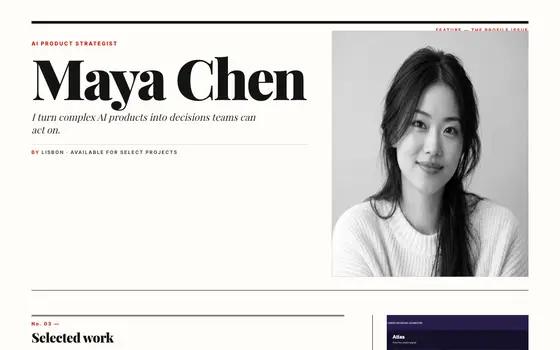 Magazine
A magazine feature: masthead rules, Playfair headlines, drop caps, red kickers and a column grid.
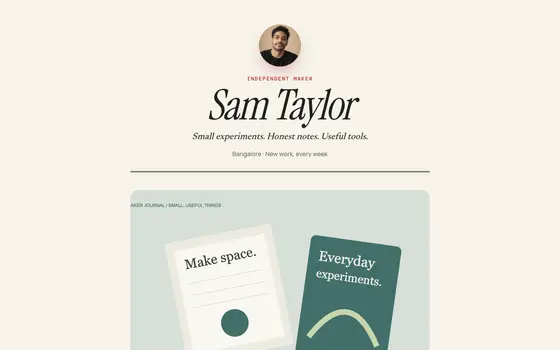 Editorial
Magazine serif with a newsroom grid.
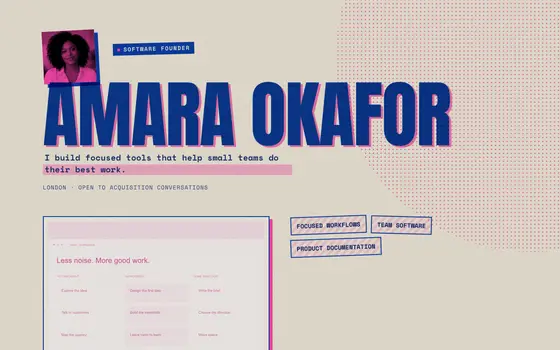 Riso Print
Two-drum risograph zine: pink and blue ink slightly off-register, halftones and paper grain.
See all 36 templates, live pages in Explore, or describe your own and Ivo builds it.
Questions
What should a writer portfolio include?
Three to six of your best clips with the publication or client named, the topics you cover, a line on who you write for and a clear way to commission you.
Should I link to clips or upload PDFs?
Link to the live piece where it still exists, and keep a PDF copy for pieces behind paywalls or that might disappear.
Do writers need a website if they have a Muck Rack or Contently profile?
Those profiles help discovery. A page you control lets you choose which clips lead, add services and rates, and see when an editor opened the link you sent.